We’re back with another weekly recap of whales and wildlife that were encountered during our trips that ran September 7th through September 13th. We’re beginning to experience some evenings with that really beautiful, golden light that September is known for, which offers us a different look as summer runs right into fall.
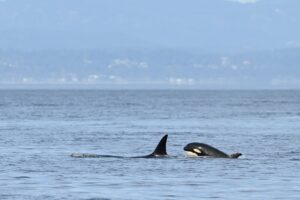
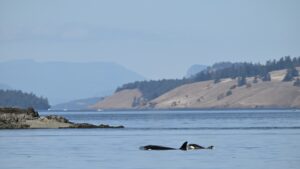
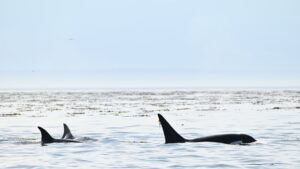
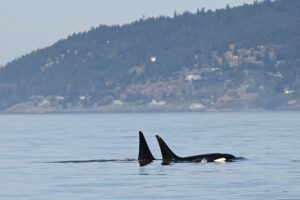
Bigg’s killer whales that we encountered over this last week consisted of the T19 trio, T35As (6), T49As (6), T60s traveling with T59A4 (5), the T60 Brothers (T60D and T60E), the 65Bs (4), T69E, and the T109As making for 33 individuals. The T19s and T49As were seen A LOT and sometimes traveling together (or just miles apart), making for some interesting trips to showcase two really BIG adult males (T19s) and one of the youngest calves in the Bigg’s population (T49A7 at ~7-8 months old).
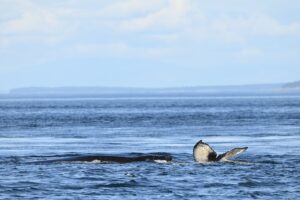
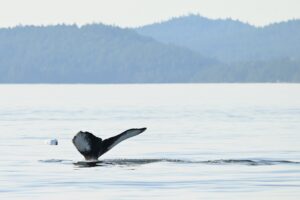
We’ve had some humpback encounters over this last week as well. From those that we could identify (using the underside of the tail flukes) we had CRC-19569 (no nickname), CRC-22818 (no nickname), Hecate and her 2026 calf, and very likely Zillion and her 2026 calf. There were others–especially out near Race Rocks ecological reserve, but feeding was their primary goal and they weren’t doing much deep diving to reveal their tail flukes. We did catch some epic, mouth-open-at-the-surface lunge feeding action though!
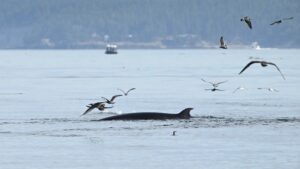
A couple minke whales seem to be maintaining their presence out along the banks just off the south end of the San Juan Islands. We haven’t had quite as many encounters with them this summer as we have in previous years, but when we do find them, they are often fun to watch as they move from bait ball to bait ball stirring up the gulls and seabirds when surface just in the middle.
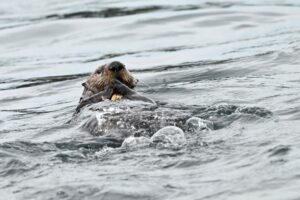
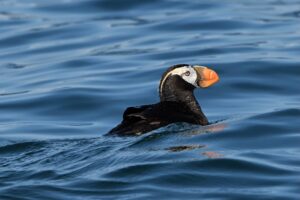
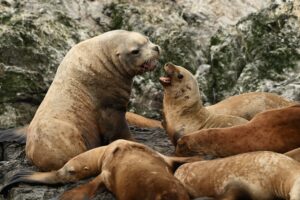
Tufted Puffins are definitely thinning out along the Smith Island, and those that are around are looking a little haggard as they transition to dull, non-breeding plumage. The goal is to blend in and not be quite as flashy and dapper as they are at the beginning of breeding season. These days, we can’t seem to go anywhere without hearing the gurgling cries and sharp whistling notes from young Common Murres. We’ve had our first Surf Scoters of the season and are also seeing Red-necked Phalaropes in small groups where some of the bull kelp has begun to detach from the sea floor and get carried off by the tide. Our token sea otter continues to maintain some regular areas around the San Juans as well, and we have definitely need experiencing an uptick in the big Steller sea lion males as they get settled in to winter with us.
As always, we look forward to seeing what next week has to offer us!