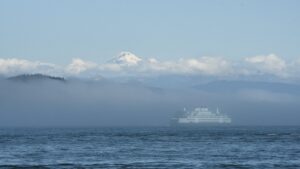
We’re back with another weekly recap of the whales and wildlife that were encountered while out on tours from August 10th through August 16th. Despite the wildfire smoke and the average conditions of “fogust” (mornings where we experience some heavy fog–typical for August), we have had some really wonderful tours and great looks at wildlife and whales.
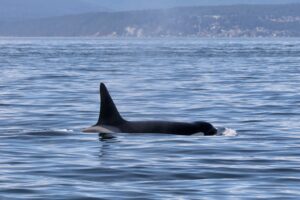
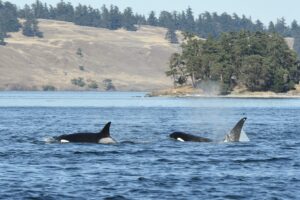
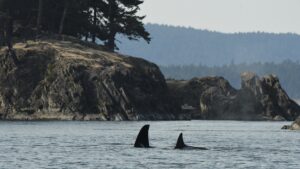
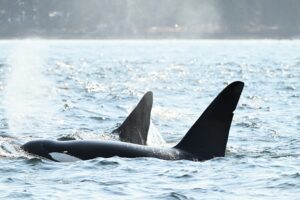
Bigg’s killer whales seen on our trips include: T2B, the T19 trio, T35As (6), T46Bs (6), T49As (6), T60D & T60E traveling with T69E (3), the T65As (no A5, for 5), T73As (4), and all four of the T77s traveling together after they had been mostly split in two pairs; this totaled 38 individual killer whales across the last seven days, with some uncommon animals showing up (T2B and T73As). We might see these individuals a couple times a year, if they happen to cruise into the central Salish Sea at the right time.
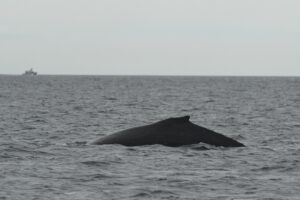
Baleen whales we encountered on our trips included some humpback whales and an uncommon-for-this-time-of-the-year gray whale. Humpbacks we were able to identify include: BCY1474 “Kaju,” MMX0007 “Bond,” the 2025 calf of humpback whale “Kappa” (yet to receive a nickname of their own), BCX1878 “Exclamation,” and a couple individuals that never did give us a fluke or other features for which to distinguish them from other humpbacks! While there have been a few gray whales seen more frequently down around the southern end of Saratoga Passage (near Everett, Mukilteo, Hat Island, and etc.), we have a less likely chance of encountering some “stray” gray whales closer to our departing marina at this time of the year, and as they are quickly moving, we often do not know who these whales are down to the individual level (some may have never been previously recorded). Still a wonderful surprise when they do pop up!
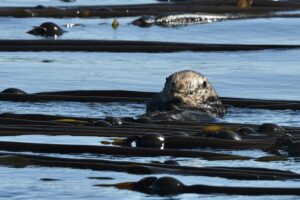
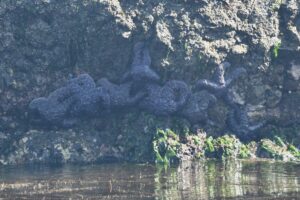
Some other notable wildlife sightings this week: the single sea otter was sighted on several of our tours and we are still seeing many moon and eggyolk jellies floating along in the tidelines while we’re out there. On some of the lower tide days, there are a few areas where we have been successful in finding sea stars along the rocky walls. Several Tufted Puffins were also spotted out near Smith Island this week–one of only two breeding locations that are left in the central Salish Sea for these state listed endangered seabirds. And other seabirds like Pigeon Guillemots and Common Murres are beginning to fledge their young, so we are seeing a lot of them sitting in groups on the surface of the water.
As always, we look forward to seeing what next week has to offer us!